PRODUCT OVERVIEW
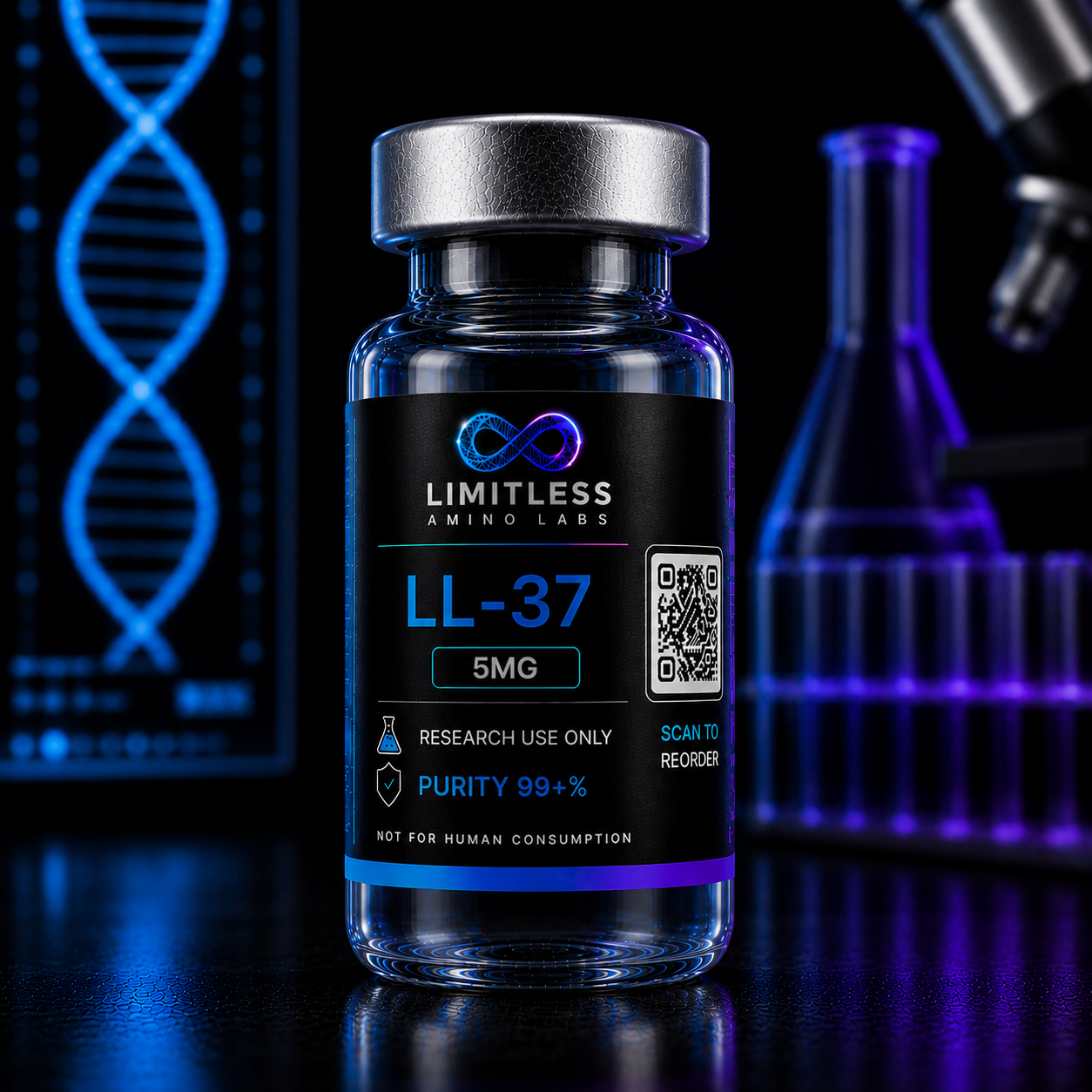
LL-37 — 5mg
LL-37 is a peptide research material supplied in lyophilized form for controlled laboratory, analytical, and in vitro applications.
Each vial contains 5mg of LL-37. The material is intended for qualified researchers conducting peptide characterization, interaction, and assay-based laboratory work.
MATERIAL CLASSIFICATION
Single-Component Peptide Material
This material may be incorporated into appropriately designed in vitro, analytical, peptide-interaction, and laboratory assay protocols. Experimental design and interpretation remain the responsibility of the qualified researcher or institution.
ANALYTICAL DOCUMENTATION
Batch Testing & COA
Batch-specific Certificate of Analysis documentation is provided where available. Researchers should review the applicable report and its analytical scope before laboratory use.
PRODUCT DETAILS
Product Specifications
| Compound | LL-37 |
| Strength | 5mg per vial |
| Category | Single-Component Peptide Research Material |
| Form | Lyophilized powder |
| Appearance | White to off-white lyophilized material |
| Intended Setting | Controlled laboratory and analytical research |
| Storage | Store sealed material under the conditions stated in the applicable batch or supplier documentation. Protect from light, moisture, and unnecessary temperature variation. |
| Documentation | Batch-specific Certificate of Analysis available where applicable |
Research Use Notice
This material is offered solely for lawful laboratory and analytical research. It is not intended for human or animal consumption, clinical use, therapeutic use, diagnostic use, veterinary use, compounding, household use, or administration of any kind. It is not offered as a drug, food, cosmetic, or dietary supplement.